High Standards.Simple Steps.
We are chasing a handstand the next skill can stand on.
Only experience can tell you what has to come first, and what has to come next.
Trust the lesson · Do the work · The rest will come
Find your path
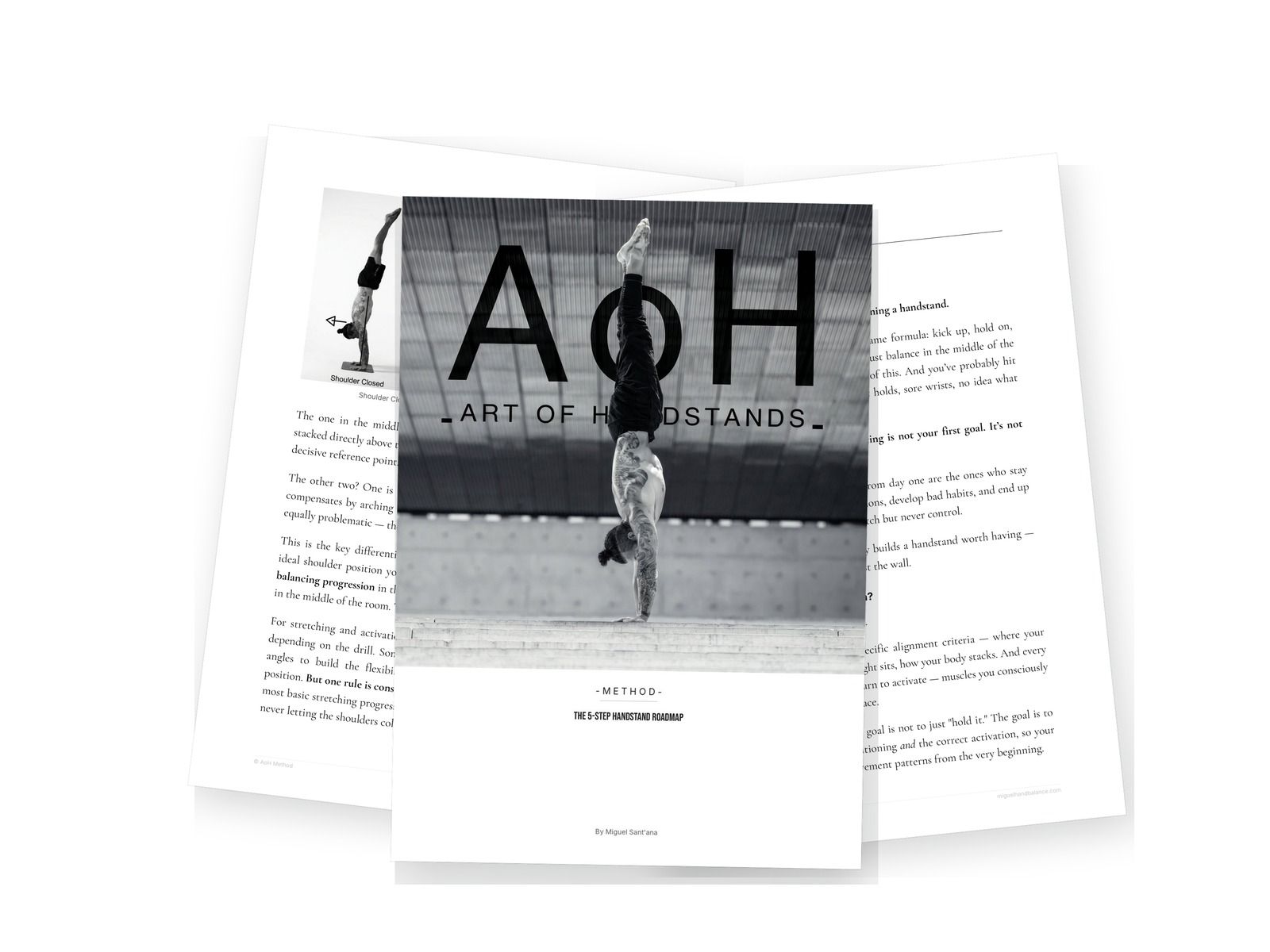
Start Here
Learn about the method and the story, plus the free Roadmap PDF.
Learn more →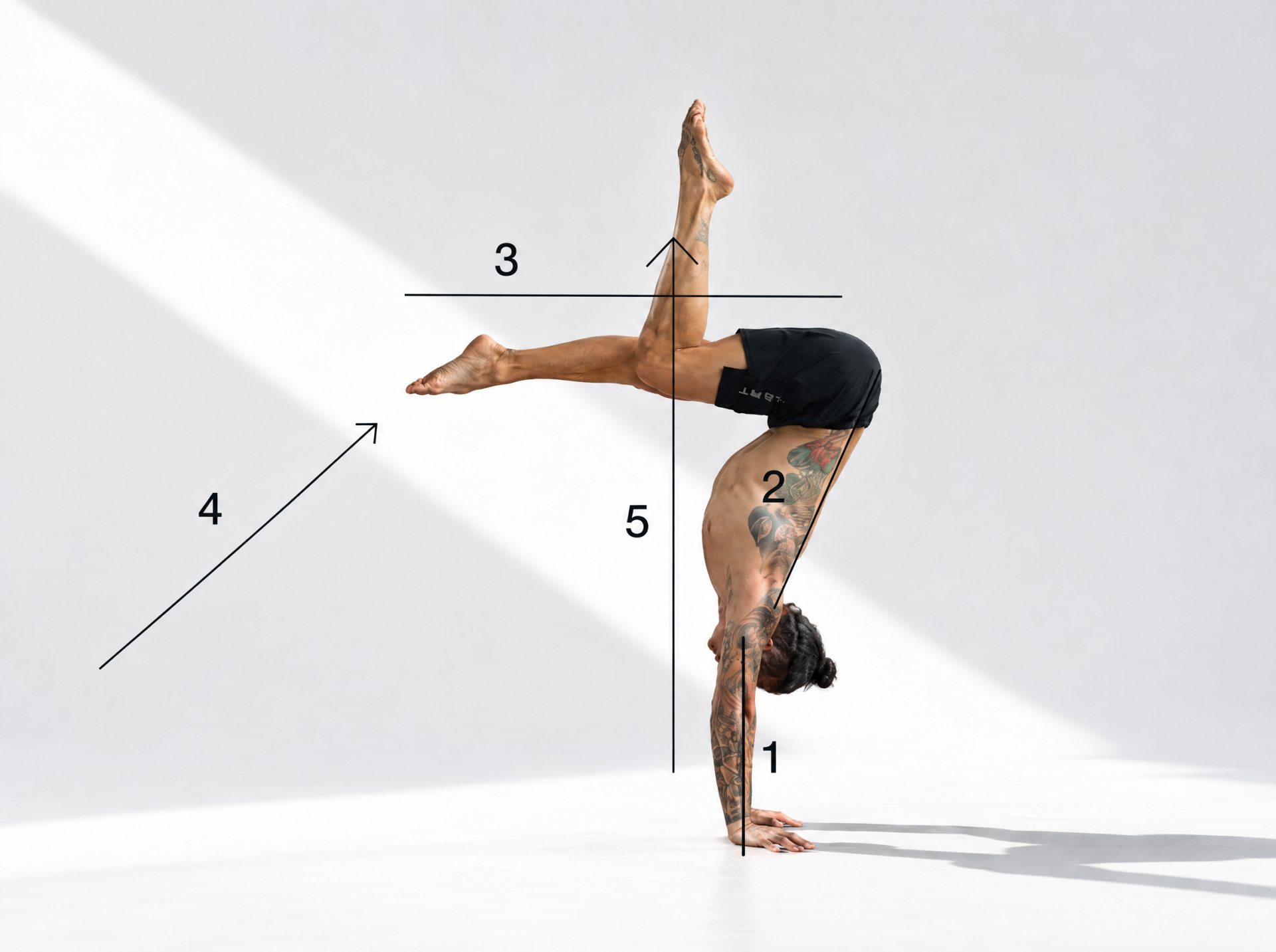
Your Handstand
is Built Here
The whole method, in order, in one place.
See the courses →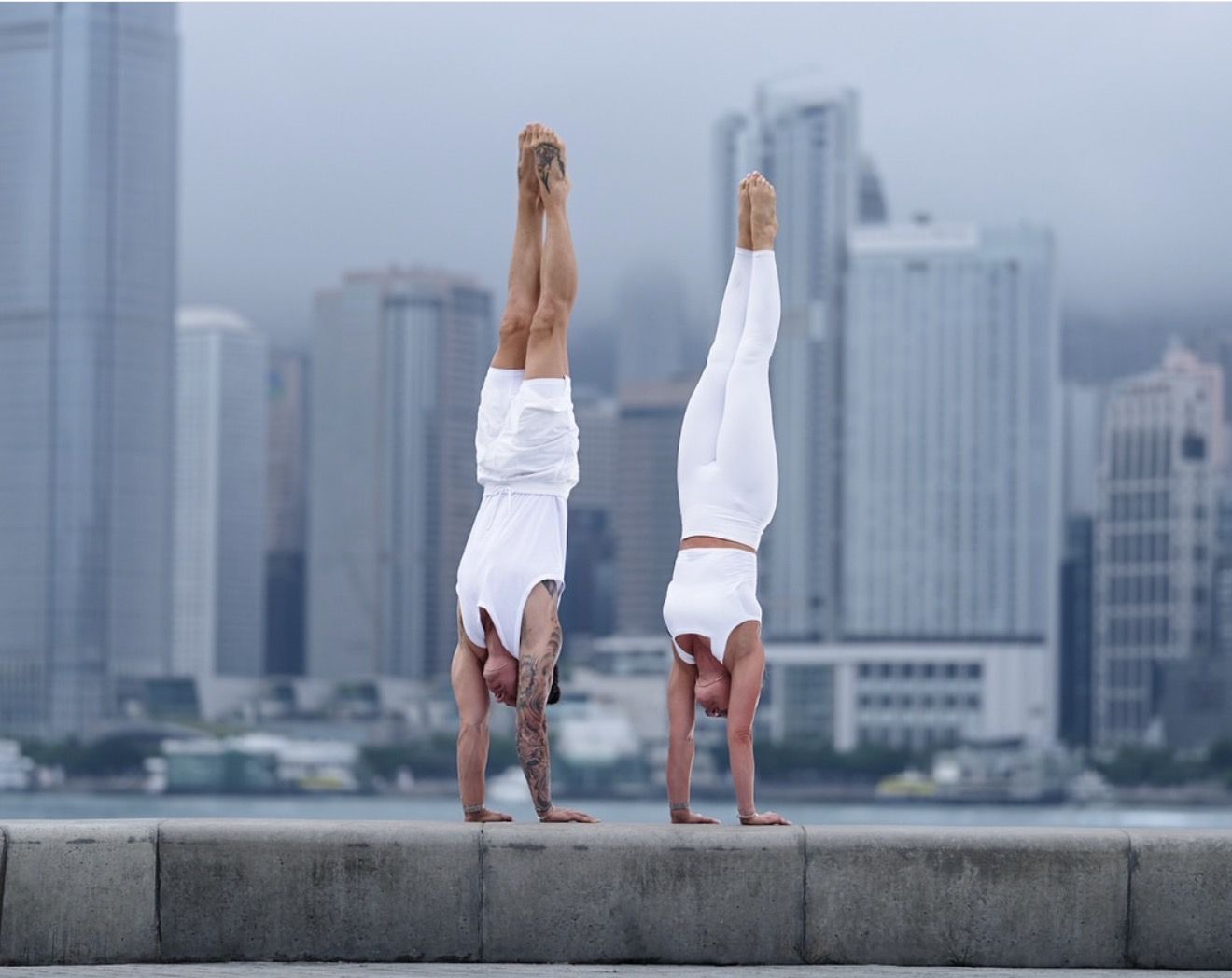
Train With Miguel
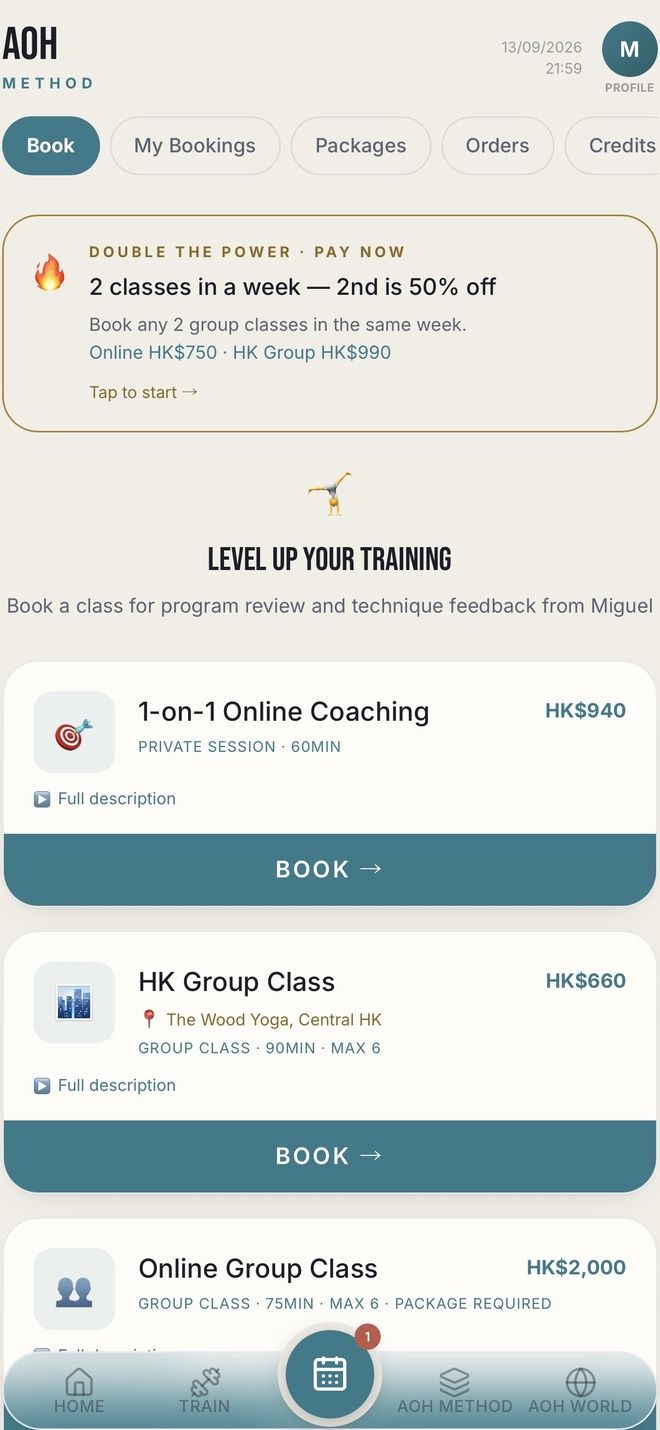
Online private and group classes, plus in-person handstand classes in Hong Kong.
See the classes →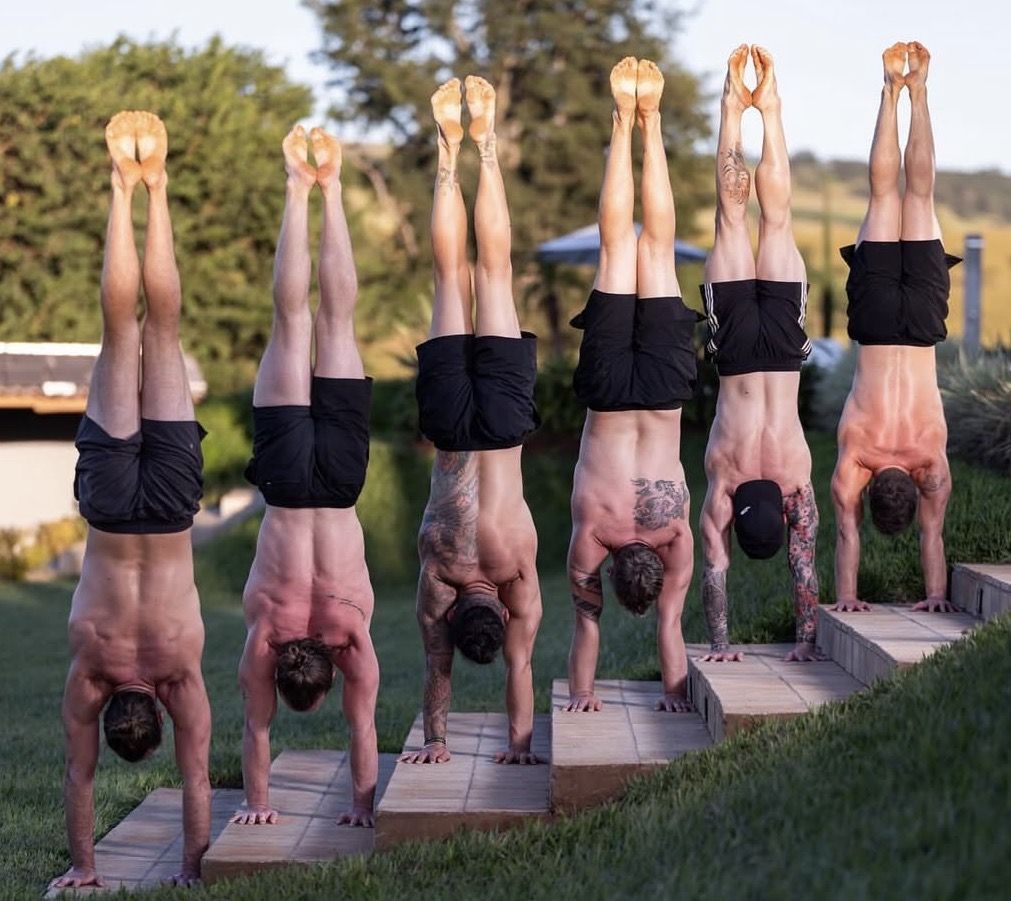
AoH Events
Retreats, Teacher Training and much more.
Learn more →Educationmindset
Skill over speed.
Activationbody awareness
Five areas on. Effort becomes structure.
Balancingtraining approach
Two inches, not two feet.
Consistencylearning order
Each step earns the next.
Students of the method
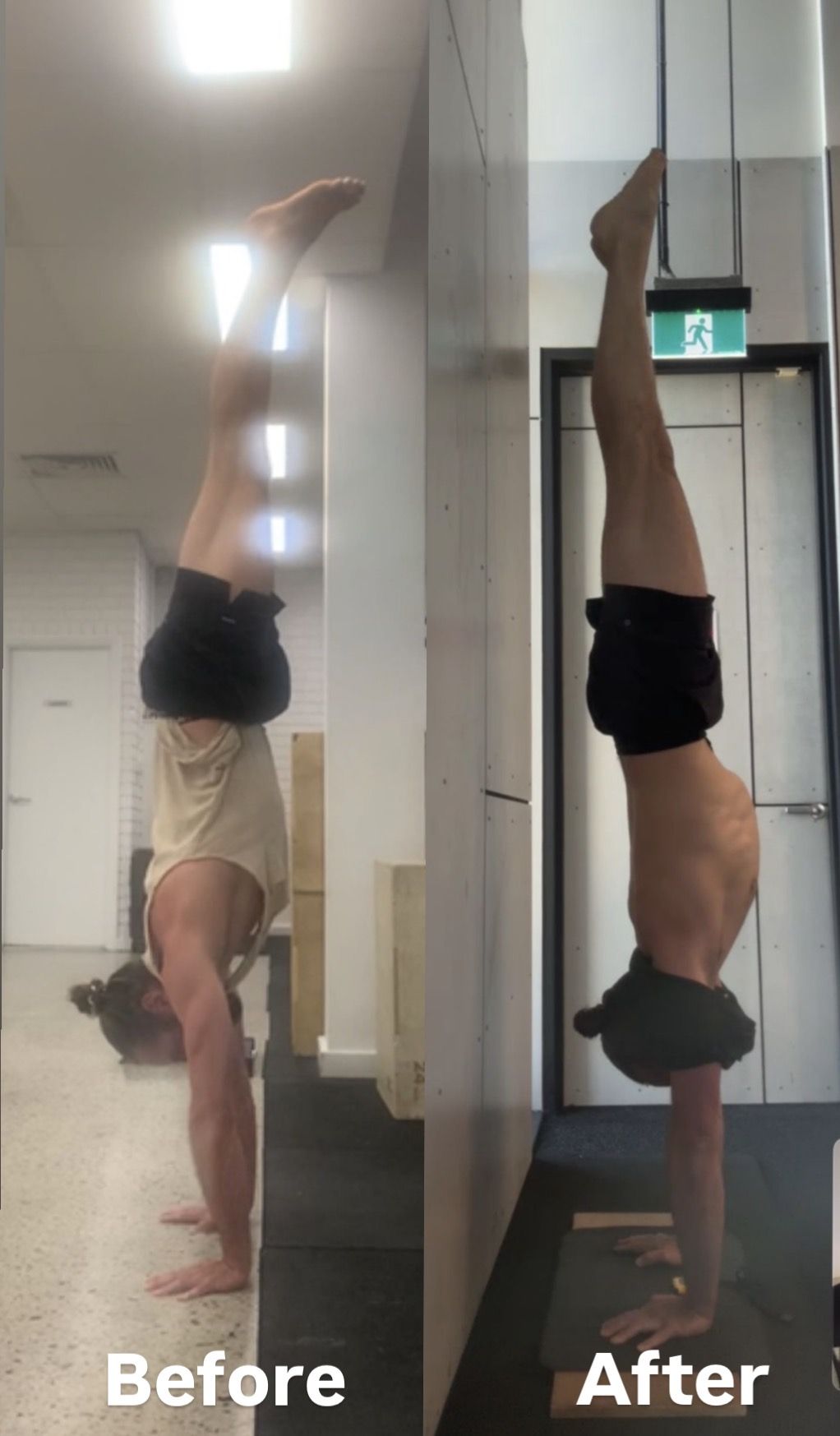
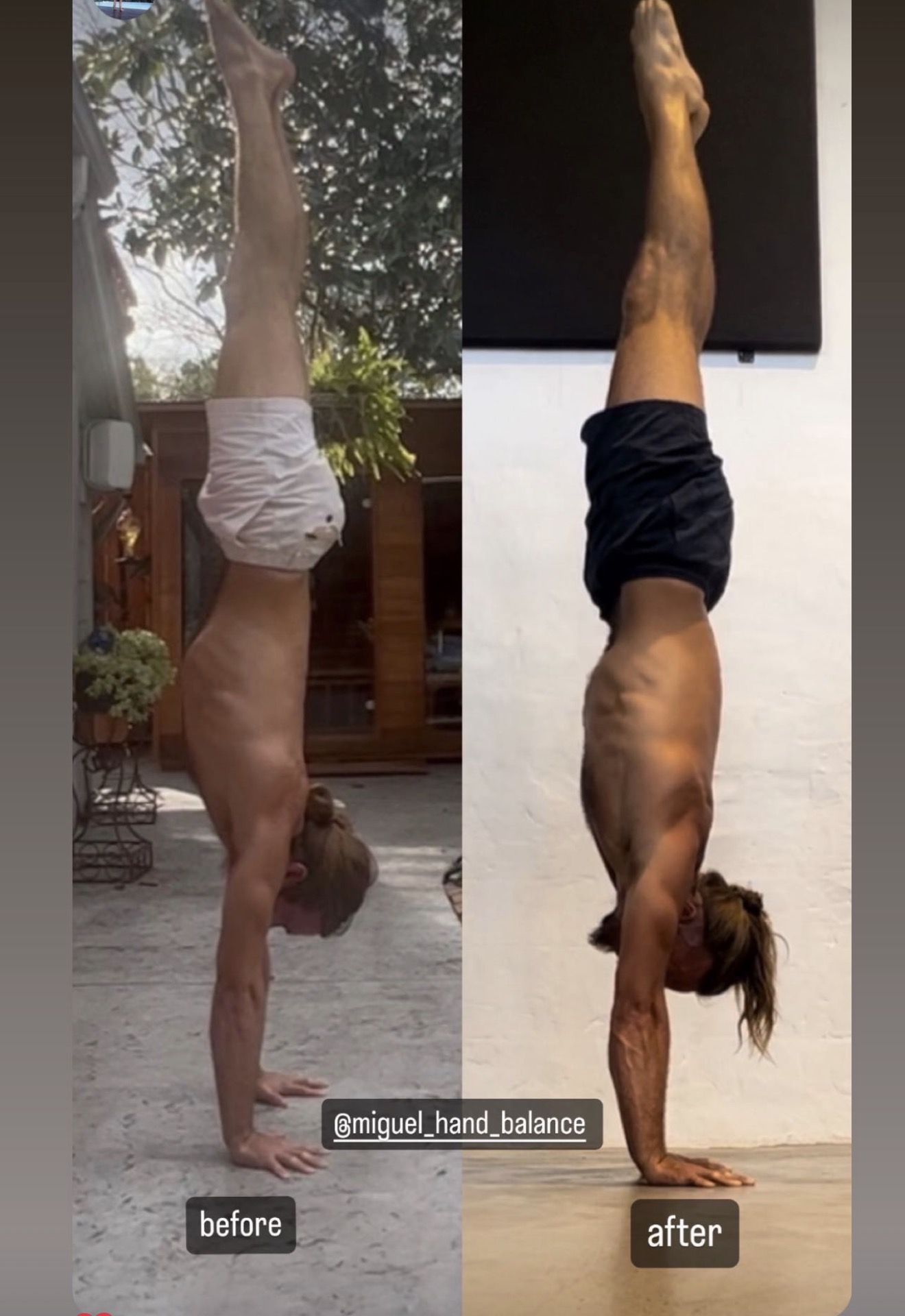
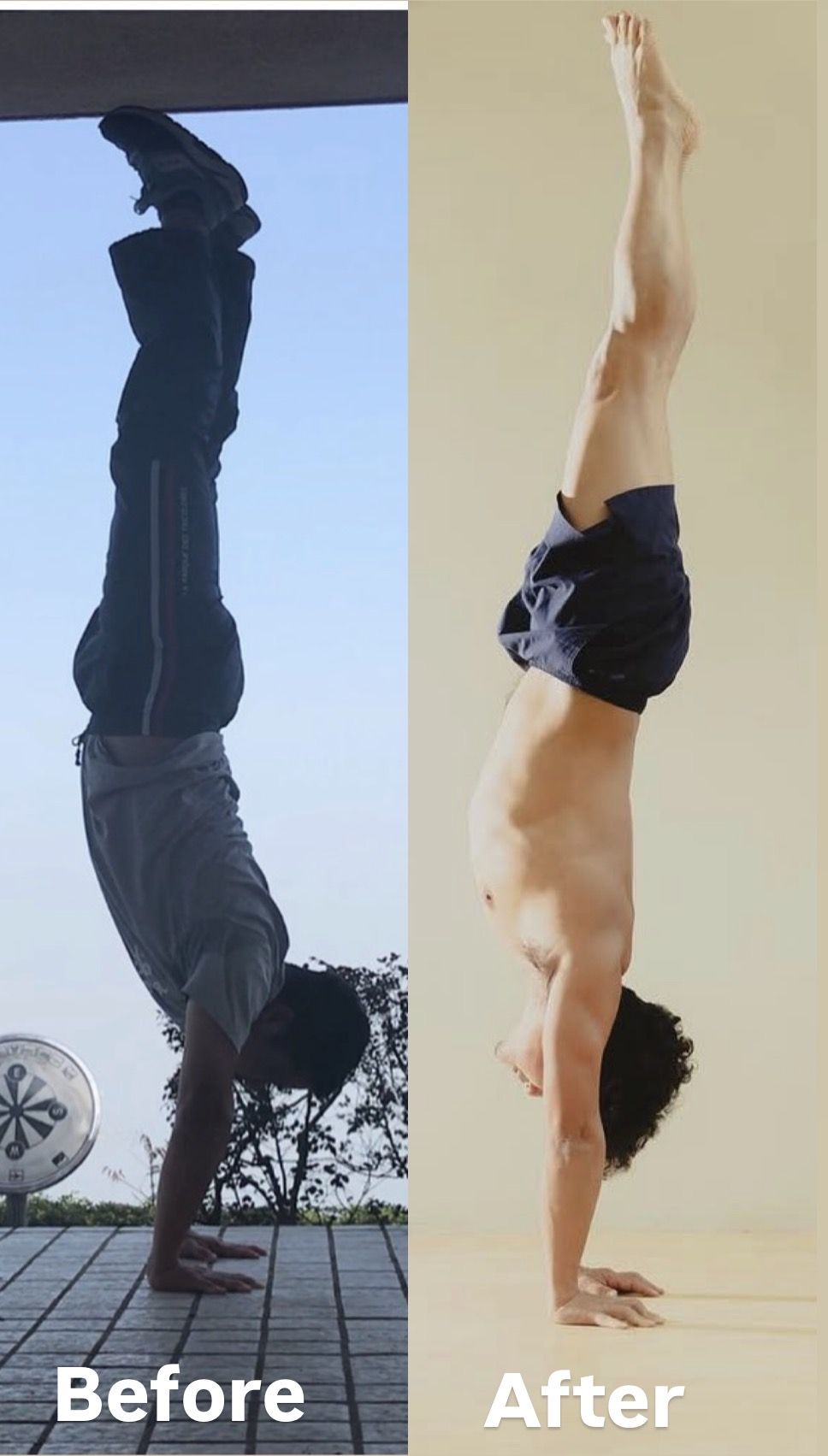
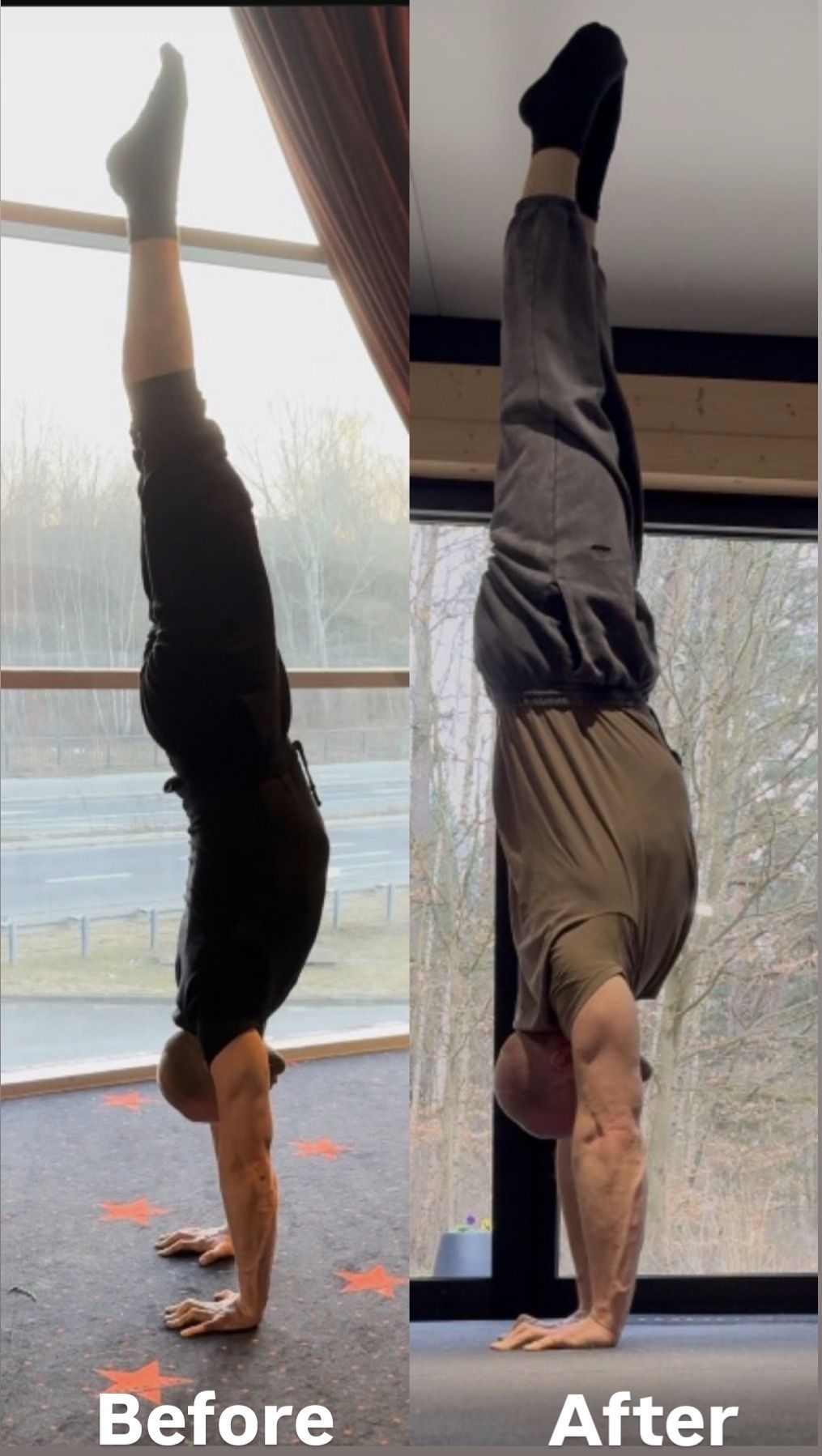
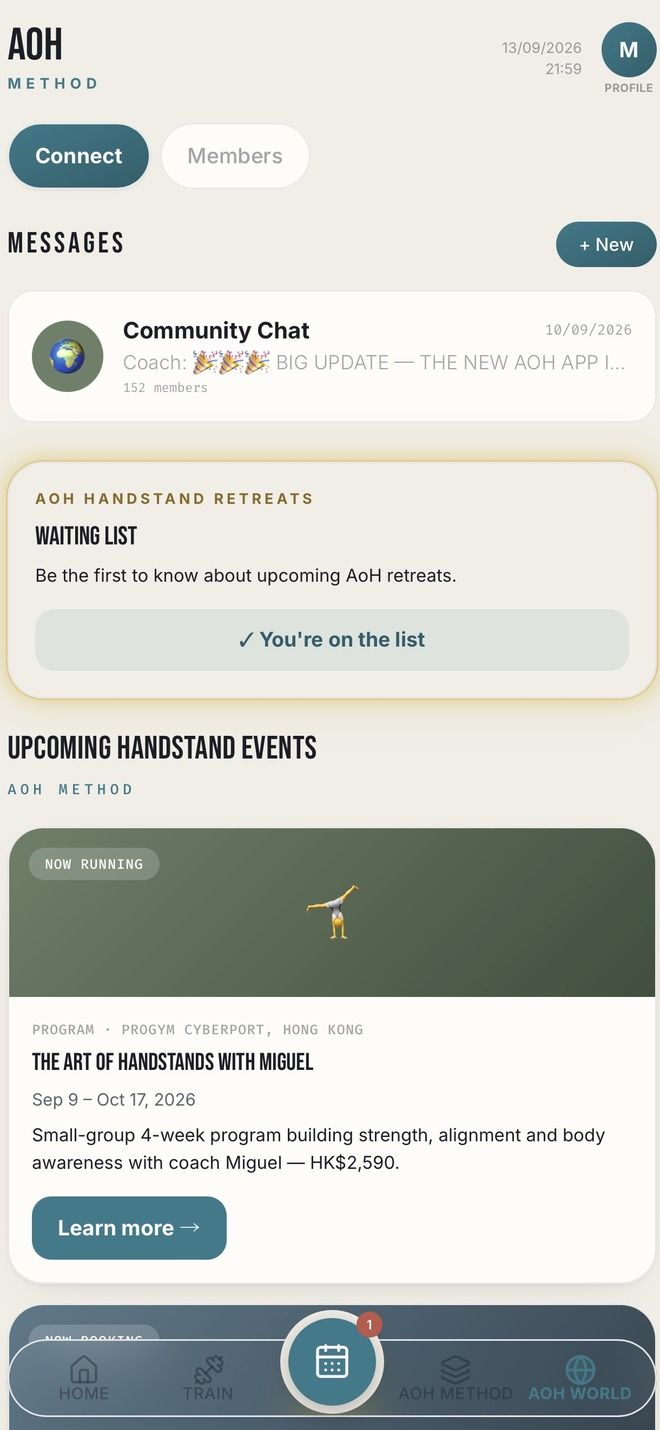
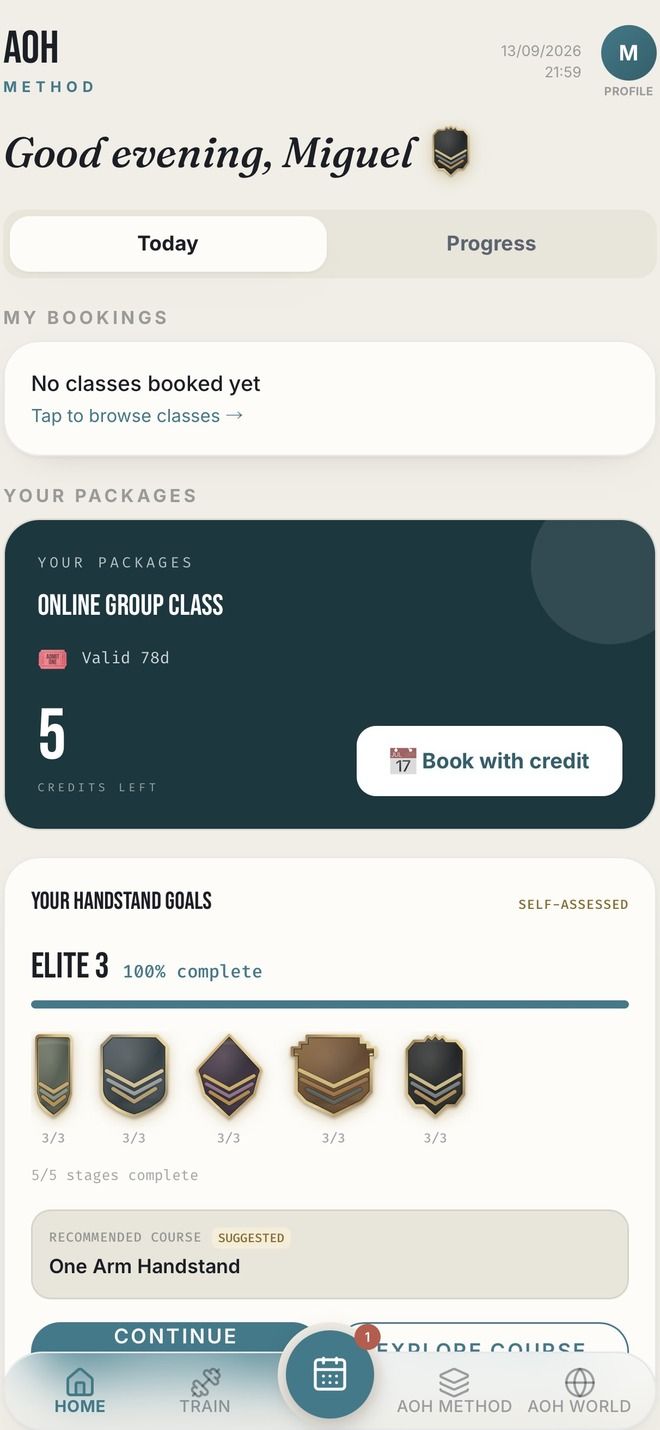
The AoH App
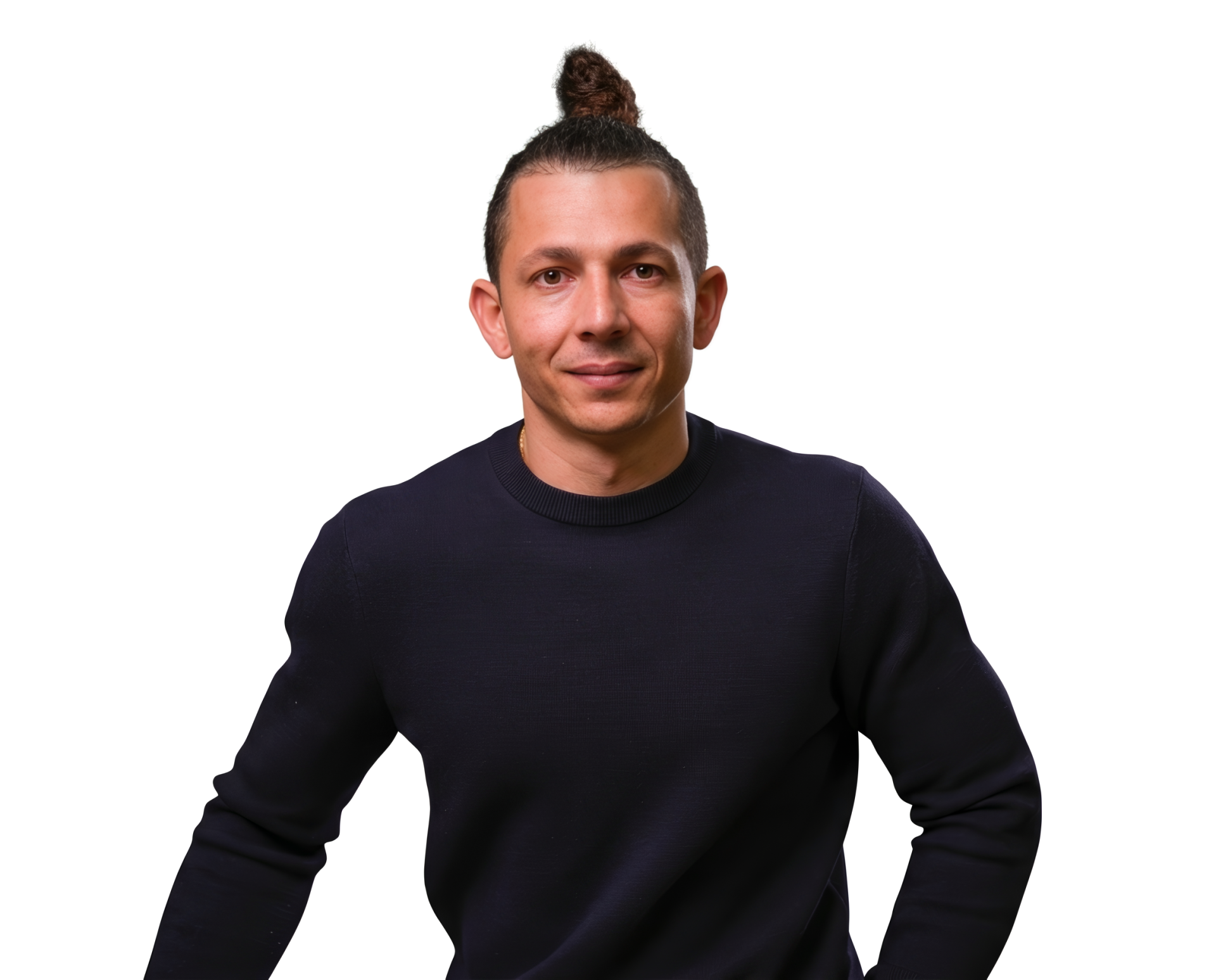
Miguel Sant'ana
It started in an Auckland living room in 2011, after a video convinced me there had to be a better way to learn this than copying shapes. The answer has not changed: balance is not found. It is built.
Everything I teach was fixed on my own body first, then refined across 1,000+ students in 35+ countries — and written down properly in the AoH Teacher Training Manual, so the people who teach it teach it the same way.
“The slower you guide the student, the faster their progress will be.”
Learn it. Activate it. Stabilise it.
Then, and only then, balance.
One method. One order. Pick where you enter it.
Stay in touch with us