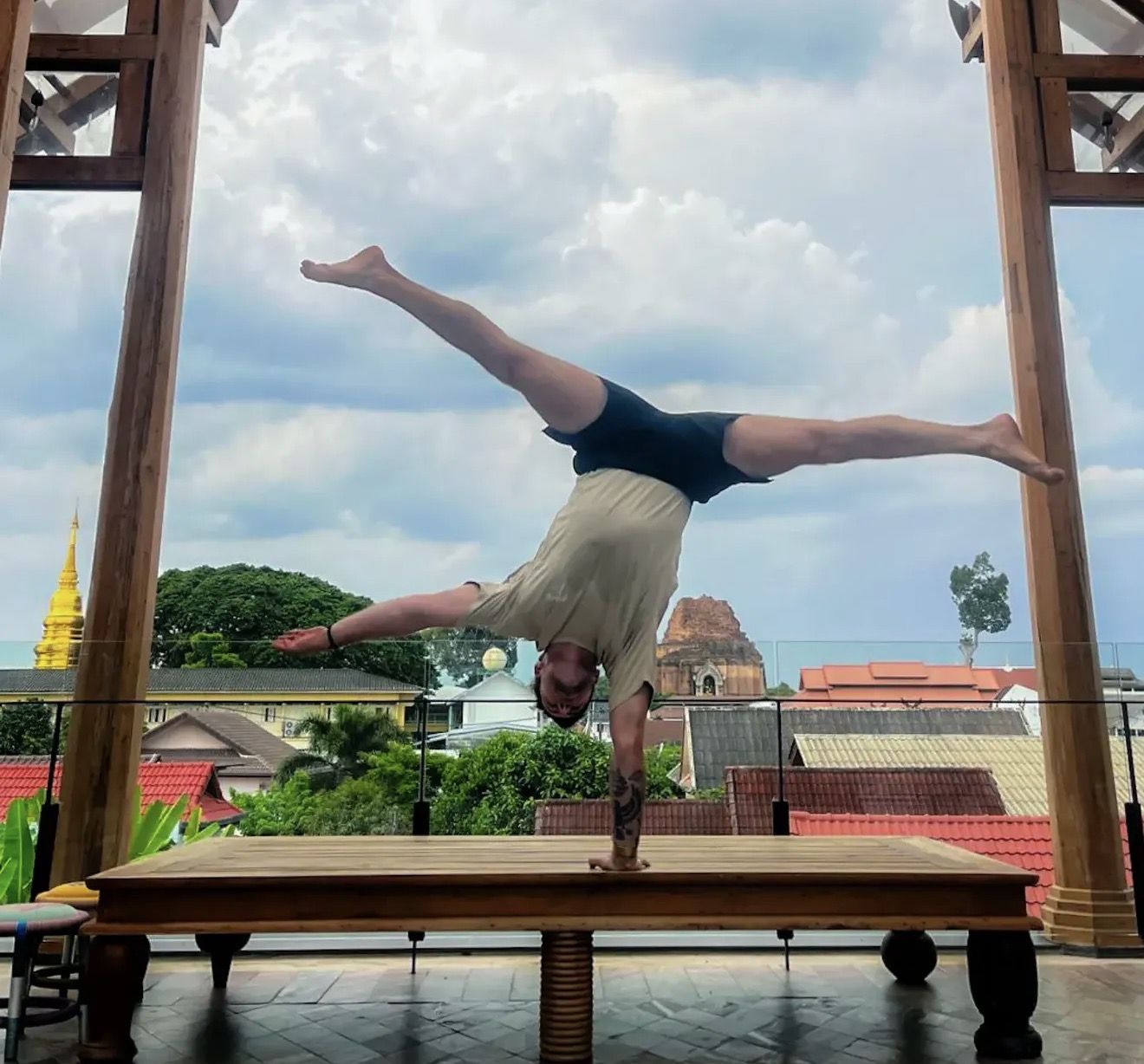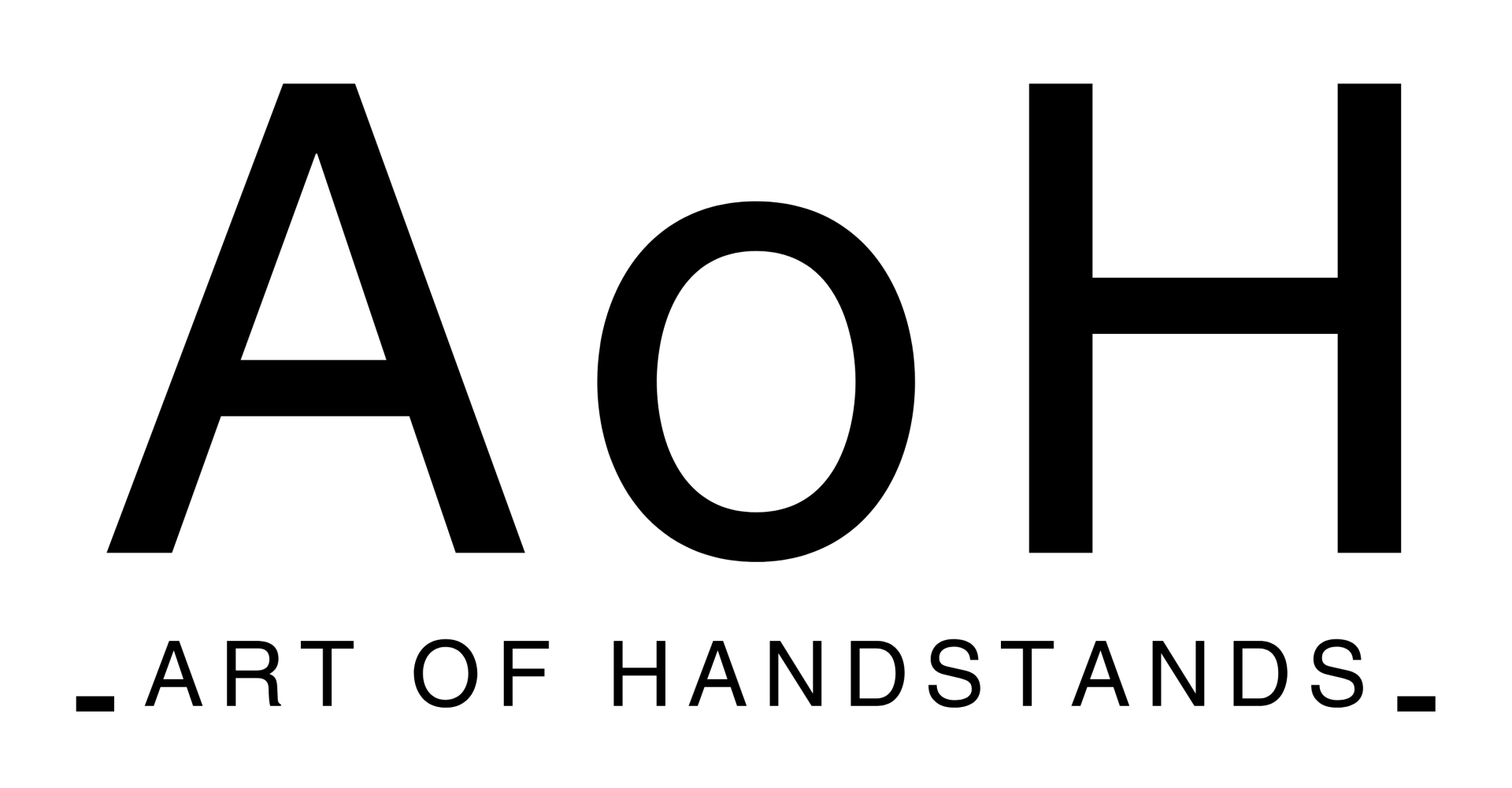
You are twisting.
Or losing stability. Or too heavy to lift. Or no idea what comes next.
Different symptoms. Same problem — you were never taught the learning order.
Modules 1–9 unlock day one · Modules 10–15 complete by November 2026 · lifetime access
Then the doors close. The course only comes back in the future, when the full course is ready — at full price. No discount. No Q&A workshop. No review spots. Buy now below ↓
The twist didn't start
when you lifted the arm.
It started before that — the moment you stopped feeling your body activation.
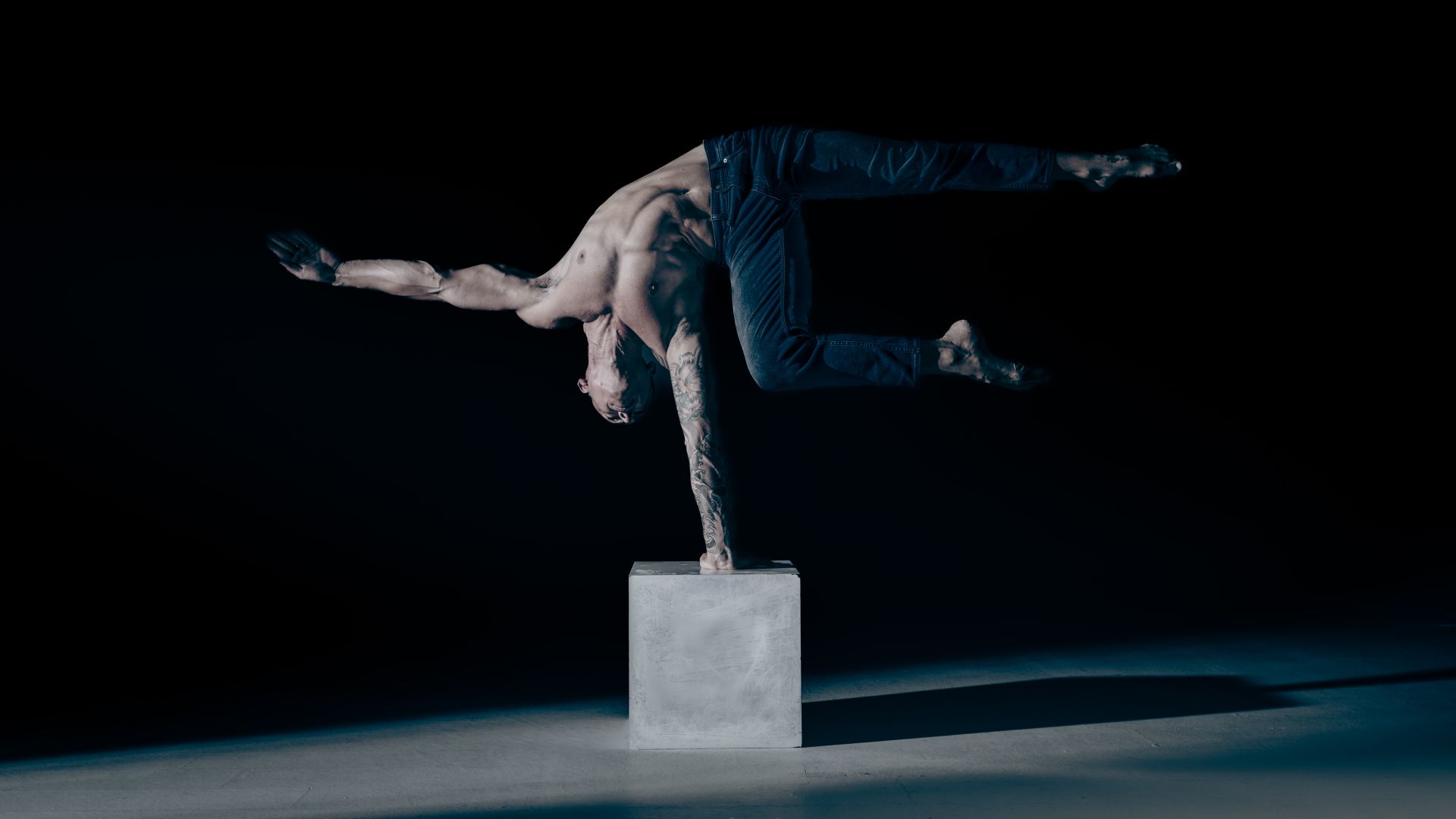
Watch what happens when you shift. Everything you were holding — the shoulder, the activation, the line — goes quiet. And once it's quiet, nothing can stop the rotation. That's the helicopter.
A shoulder that stays awake can slow a twist. It can catch it. But most people aren't losing the shoulder only — they're losing the whole body at once, and they've never been taught to notice.
Chest or back to the wall, close as you can — close enough that it doesn't forgive you. Straddle, then start the shift. If your feet touch at any time, you turned.
The line should stay square from two hands to fingertips to one arm. Every part of it.
How many activation points are there? What does each one feel like under load? Which can you isolate on command?
In fifteen years of teaching, I've rarely seen it answered the way I'd expect. The classic tell: "push — elevate your shoulder" — and the student pushes the floor away. But what about the other two activations the shoulder needs? Different action, different body, different result. And almost nobody has ever named it.
The twist is not a balance problem. It is not a strength problem you fix with more conditioning.
It is an order problem.
You don't look
for balance.
You build it.
"Don't celebrate your steady holds.
Celebrate the fights."
Six phases.
One clear road.
Foundation → one-arm shapes
Every phase is built on the one before it. You don't move on until the last one holds.
Body position. The shapes. The shoulders. The body shift.
Where the position is actually built.
Sharpening the fingertip and the shift.
Bridging stability to true balance.
The freedom you've been earning.
The reason for everything. Modules 10–15 complete by November — locked in at pre-purchase.
The starting point is a 60-second two-arm hold.
Or close to it. Not a personal best — a hold you own.
Past that, you're somewhere in here.
-
✓
You're ready Your two-arm work is solid. The foundations are built. One-arm is the obvious next step and you want to start it properly.
-
✓
You're curious You've seen one-arm handstands online, you're drawn to them, and you want to understand what's actually involved before you commit years to it.
-
✓
You're refining You have a hold. A few seconds, maybe more. But it's shaky, the shape isn't clean, and you know there's a better version of it in your body.
-
✓
You've stalled Same wobble, same fail point, every time. You don't need more drills. You need a different frame.
Not drills.
The first thing this course teaches is what your body is supposed to be doing while it carries the load. Body activation — what to switch on, in what order, and how to keep feeling it at the exact moment most people stop feeling anything.
That's the part everyone skips. It's why the drills don't work. You can't hold a position you can't feel.
Once you can feel it, the order makes sense. What to build. When it's allowed to carry load. What has to be true before the arm comes up.
You don't look for balance.
You build it.
Miguel Sant'ana
Founder of Art of Handstands · The one behind the method.
Fifteen years chasing the one-arm handstand. Started in 2011 in an Auckland living room after a YouTube video hit me the wrong way — and never stopped. Everything you'll learn in this course was built the hard way: fixed on my own body first, then refined across thousands of students in over thirty countries.
I don't teach shortcuts. I teach the order — the one that survives every plateau and takes you to the shapes most people never touch.
Since 2011
Hours
Taught In
"Don't celebrate your steady holds. Celebrate the fights."
None of my students — the ones who've trained with me for ten years, the ones who've flown to my home in Brazil — have ever had my full method in one place.
This course is where it lives.
First time ever.
If you've trained with me before, you'll finally see the road you've been walking. If you haven't, you start with the whole map in hand. Same brain. Same method. Same standards. Just consolidated for the first time.
What the standard looks like.
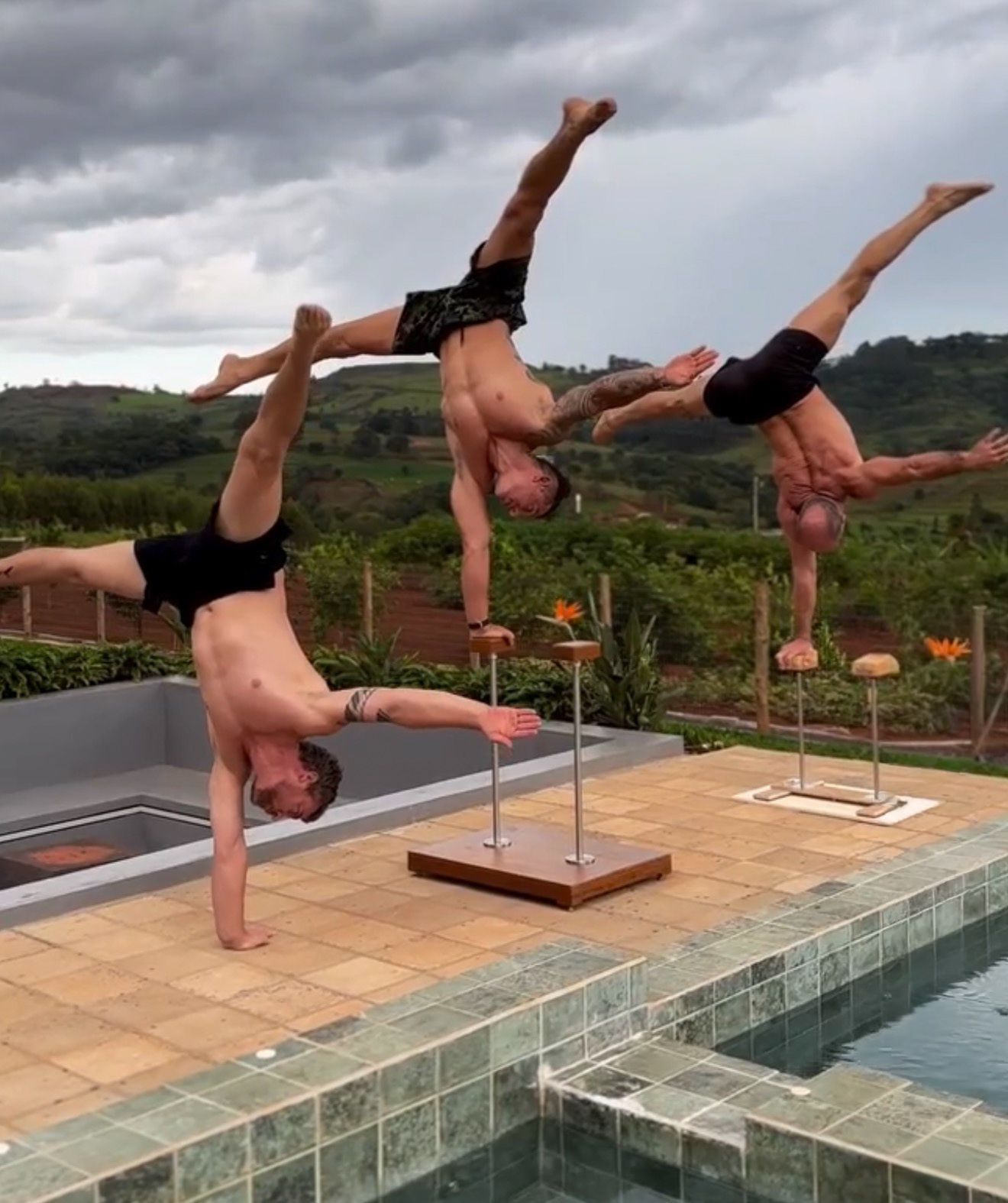
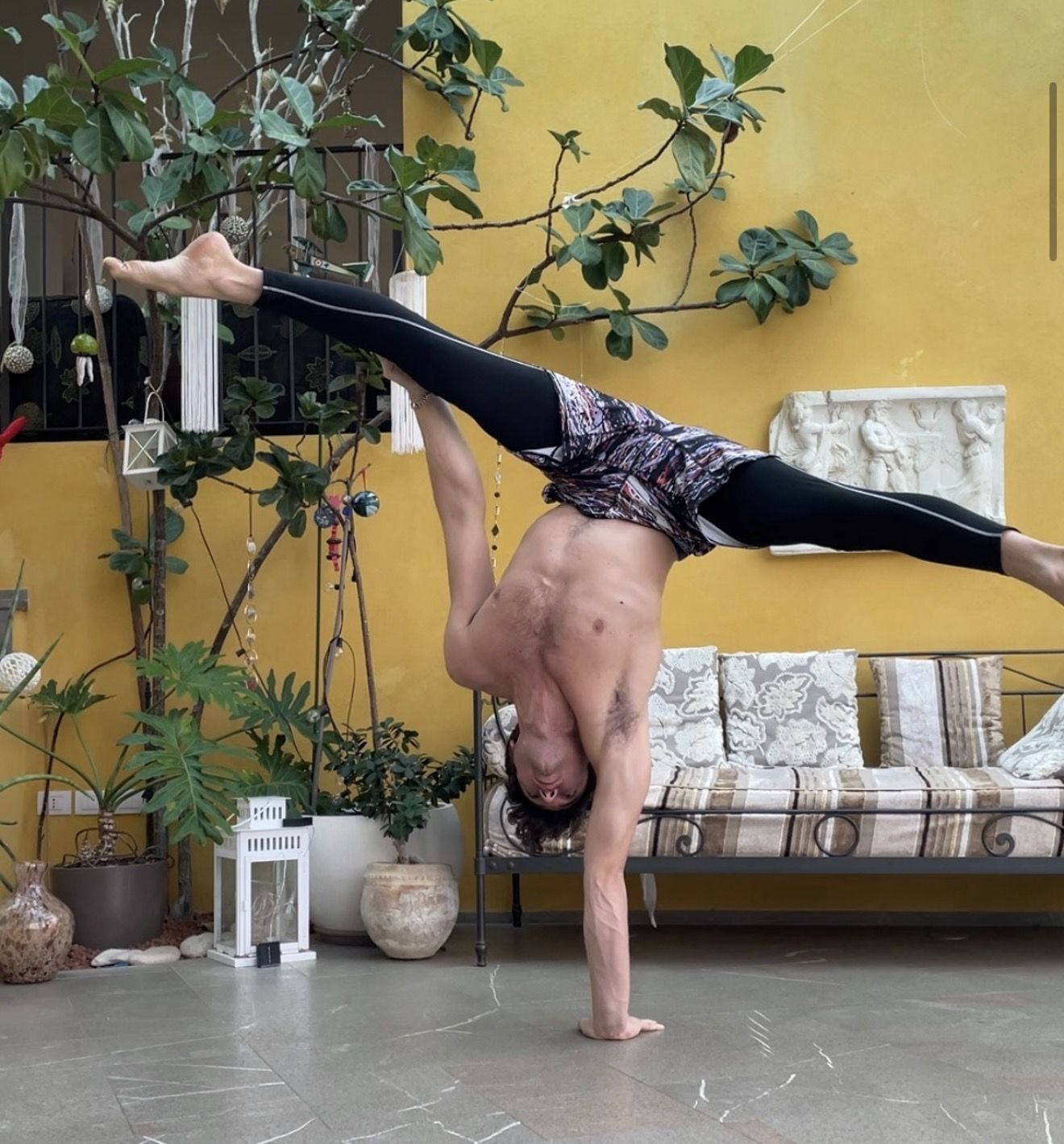
Six students. Five countries. Twenties to fifties. All of them started as adults.
Look at the line. Not how long they held it — what the position is doing while they hold it. Shoulders. Ribs. Hips. Square.
This is what the order builds. It's the same standard in every photo, because it's the same method.
Five years with Miguel.
In his words.
“He doesn’t put all of his knowledge in front of you at once. He delivers his wisdom one gem at a time — so you build the habits to eventually become your own master and coach.”
“This time, the One Arm Course gives you access to his mind in one shot. All of his knowledge, gathered in one place, accessible at any time — something truly unique. Relying on a single source of guidance is what lets you avoid the noise of different methodologies that distract you and slow your progress.”
Alberto · Italy · Miguel’s student for 5 years and countingWhy this
actually works.
Five principles that turn a twisting shift into a one-arm you own — built from the ground up, in the exact order your body needs.
Foundations first
The work you do here pays off for years. Skip it, and you'll only rebuild it later — slower, and from scratch.
Eight cues · the Secret Weapon
The full engagement sequence almost nobody teaches — seven foundational cues plus the Wrap that locks the one-arm in. Master it and the one-arm stops being luck.
Alignment you can measure
Real angles, not vague cues. You'll always know whether you're on the line — or quietly cheating it.
Quality over the clock
Your last five seconds should look like your first. That's the difference between a hold and a habit.
Understanding, not imitation
Learn why every piece works, and you'll never lose the skill — or plateau on it — again.
Fifteen modules.
Each earns the next.
A complete training system, growing module by module. Pre-purchase locks you in for lifetime access — every program, every progression, every module added after launch.
You don't design your own plan. You follow the one that's already built.
-
01
Every program tells you exactly what to do.
Warm-up, the work, rest intervals, self-check questions at the end. Tomorrow's session is already decided. No guessing.
-
02
Built-in adjustment. No shame.
If a week's program doesn't land, drop back to the previous one and stay longer. The roadmap waits. Doing it well matters more than doing it fast.
-
03
Honest gates measure your progress.
Program 9. Program 14. Program 26. Every program has its own standard — you advance only when you meet it. The clock is flexible. The standard is not. Some students hit each standard in the target weeks. Others take longer. Both are correct if the standard is met.
-
04
The session itself evolves with you.
As your one-arm work grows, the rest of your session quietly trims. The plan thinks for you about everything — what to add, what to keep, what to let go.
-
05
Lifetime access. Yours as it grows.
Pre-purchase now and every program added between launch and a decade from now unlocks for you automatically. One purchase. A course that keeps growing. Yours forever.
The module list stays inside — not as a secret, as protection. The fastest way to break this method is to read it out of order and skip ahead. The order is the method. You get all of it, in the order that works.
You don't design.
You follow the plan.
Live Q&A workshop with Miguel
Buy during the pre-sale and you're invited to a 1-hour live Q&A workshop with Miguel in mid-October. By then you'll have weeks of training behind you — bring the questions from your own practice, and get answers that support exactly where you are on the road.
Can't make it live? The replay goes inside the course. Pre-sale buyers only.
Free video review with Miguel
Pre-purchase in the first 25 and Miguel personally reviews your one-arm practice. A one-off review: train the material for 4–6 weeks, film your training videos from Programs 1 to 3, send them in. Miguel watches every video and writes you a personal review for each one — what your body is actually doing, and what to sharpen next. Written feedback, not a video call.
Once the 25 are claimed, it's closed. No exceptions.
This review is priced separately at $120 USD. Included at no cost — first 25 buyers only.
Square.
Every part of it.
Before you
join the list.
Is pre-purchase open now?+
Yes — but only until September 12. The pre-sale runs September 2–12. $449, then the doors close. The course comes back at the November launch at $549 — course only, without the pre-sale bonuses. Hit BUY NOW in the checkout section below.
Modules 1–9 unlock the day you buy. Modules 10–15 complete by November 2026, included, no second payment.
Lifetime access locked in the moment you pre-purchase.
First 25 buyers also get Miguel's one-off written review of their one-arm training videos (Programs 1–3) — a $120 value, included free.
Do I need to already have a handstand?+
The starting point is a solid two-arm handstand — around 60 seconds, or close. Not a personal best. A hold you own.
If you're not there yet, Levels 1 to 4 build exactly what this course is asking for.
How long until I get my one-arm handstand?+
Honestly? It depends on your starting point and how consistently you train — and I won't promise you a number, because anyone who does is selling you something. What I can promise is the clearest, most complete path there is, and that if you follow it, you won't be wasting your time on the wrong things.
The goal is to get you there as well as possible, not just as quickly as possible.
How often should I train?+
Ideally 3–5 times per week, 1–2 hours per session (not counting your warm-up). The course includes the full 57-week Practice Roadmap — 35 programs across the phases of training, plus 7 downloadable Practice Roadmap PDFs (one per module, printable, for practice at the wall). Each program is a complete session you follow week by week. Not "a sample" — the actual plan.
Do I need any equipment?+
Very little. A clean wall (about 3 metres of space), a stopwatch (or your phone's stopwatch — not a timer), a phone for filming yourself, and a notebook. That's enough for the first 24+ weeks.
Late in the course (back-to-wall fingertip work) you'll also want one yoga block for the shoulder isolation drill. Nothing exotic, nothing expensive.
What makes this different from free tutorials?+
Free tutorials teach the shortcut version — coming off the wall by sinking and leaning. It feels faster and hits a ceiling fast. This course teaches the foundation that the shortcut skips, which is the only thing that actually gets you to the advanced shapes.
Is this a one-time purchase or a subscription?+
One-time payment, lifetime access. You pay once and the course is yours — every lesson, every future update, every new shape I add. No subscription, no renewal.
When does it launch?+
The full course completes in November 2026. The pre-sale runs September 2–12 with $100 off the launch price — and modules 1–9 unlock the day you buy.
One day you shift. And nothing turns.
It is quiet up there. That day is the reason for all of this.
Stop guessing.
Start building.
$449 pre-purchase — goes to $549 at the November launch. Or split it: $249 today + 2 × $115 monthly. Modules 1–9 unlock today. Final modules complete by November. Lifetime access. Plus the live Q&A workshop with Miguel in mid-October. After September 12 the doors close — the course returns in November at $549, without the bonuses.
Secure checkout · instalment plan available at checkout · closes September 12
Secure checkout · Instant access after payment · Lifetime access
All sales are final — digital content delivered immediately. See the Terms and Conditions.
Questions before you commit? info@artofhandstands.com — it comes straight to Miguel.